China’s 14th Five-Year Plan in Review: Gains, Gaps, and the Road Ahead
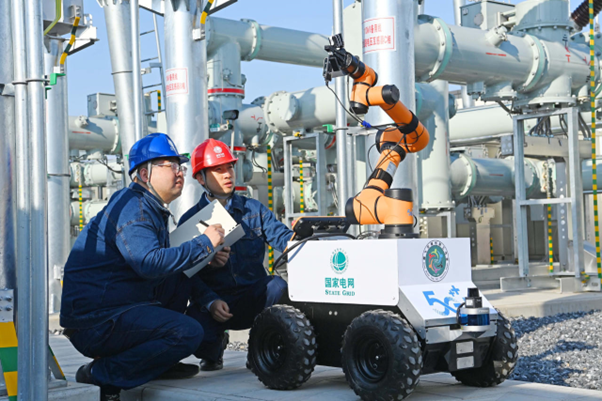
Technicians inspect a robot equipped with DeepSeek artificial intelligence in Chuzhou, in China’s Anhui province. CFOTO/ZUMA PRESS
When China first unveiled its 14th Five -Year Plan in 2021, the world was already watching a nation in the process of transition. This plan in particular, which runs through 2025, is not just a roadmap for economic growth, but also a manifesto for resilience in a turbulent global order. Given the challenge of growing U.S.–China tensions, a global tech arms race, and domestic demographic decline, China’s latest plan signals a decisive pivot inward without closing the door to the outside world entirely.
At its core is the “dual circulation” strategy, a new development model that prioritizes domestic consumption and innovation while selectively engaging international markets. Long gone was the single- minded push for exports and GDP growth; instead, the CPC placed its bets on the spending power of its middle class and the power of self- reliance.
As China nears the end of this five-year cycle, there is merit in assessing how much of this bold strategic shift has translated into structural resilience and how much remains rhetorical. Framed against the backdrop of a global pandemic, increasing strategic scrutiny, and internal economic headwinds, this plan was never designed to be business as usual. Unlike China’s earlier development blueprints, this one prioritized what it termed “high-quality development”, a shift that, on the surface, suggests a more mature model. But maturity in ambition does not always guarantee clarity in execution.
China’s consumption has played a growing role in overall growth, and urban employment has been resilient in the post-pandemic years. While overall GDP growth has settled at a slower but more sustainable pace compared to the last decade, the structural changes supporting it with improved social security coverage, and moderate service-sector expansion are quite notable.
However, the challenges persist as there are regional inequalities that remain ingrained in the system, with inland provinces lagging behind coastal powerhouses. Private sector confidence, particularly among small and medium-sized enterprises, is yet to fully recover from years of regulatory control and trauma caused by the pandemic era. And consumer sentiment has remained quite cautious amid concerns about youth unemployment, real estate instability, and long-term demographic decline.
The most ambitious pillar of this plan was its push for technological self-reliance. Framed as a response to intensifying strategic competition, China pledged to become a global leader in key emerging sectors: semiconductors, artificial intelligence, clean energy, aerospace, and digital infrastructure. In many areas, China has made measurable strides. R&D investments, homegrown tech ecosystems and flagship achievements - ranging from lunar missions to electric vehicles and commercial aircraft - have mostly bolstered domestic confidence. Major investments in 5G, data centers, and digital platforms have also helped rewire China’s digital economy for the next era.
Still, the dream of true tech independence remains aspirational in critical sectors. The country continues to face blockages in advanced semiconductor manufacturing, software development, and access to cutting-edge scientific tools. Export controls and tightening restrictions from Western economies have complicated these ambitions.
Another notably important part of this plan that is of international significance is China’s green transition. The country committed to peak carbon emissions before 2030 and reach carbon neutrality by 2060, these targets required foundational shifts in energy production, industrial policy, and infrastructure. Safe to say, progress seems to be swift in renewable energy: wind, solar, and hydro capacity have grown exponentially, and the nation’s electric vehicle adoption has surged ahead of expectations. Green infrastructure - from eco-cities to smart grids has gone from central to local development plans. And key environmental indicators, from urban air quality to water management, have shown visible improvement.
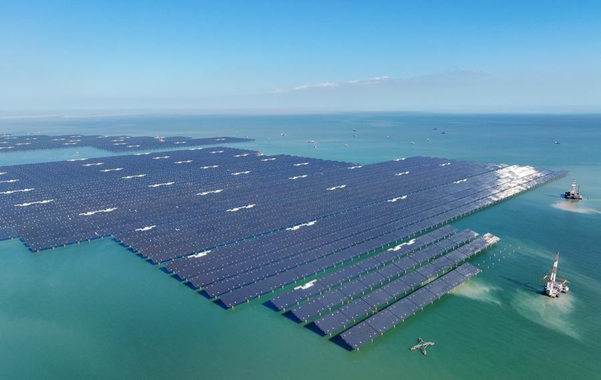
An aerial drone photo taken on Nov. 13, 2025 shows an offshore photovoltaic project in Dongying City, east China's Shandong Province. (Photo by Zhou Guangxue/Xinhua)
But the transition remains partial. Coal still reinforces much of the energy grid, and balancing energy security with decarbonization remains a delicate act. Industrial emissions, particularly in heavy manufacturing and construction, remain stubbornly high.
On the foreign policy front, China has maintained a posture of conditional openness, particularly in sectors where foreign capital and technology serve national goals. Certain manufacturing and service sectors have seen lowered barriers, and initiatives tied to the Belt and Road continue to push outward. But foreign investor sentiment remains lukewarm, weighed down by legal opacity, shifting regulatory goalposts, and security-driven decision-making. For regional peers, this selective openness reinforces the need for diversified economic engagement strategies that are not overly dependent on Chinese demand or capital.
As the curtains fall on the 14th Five-Year Plan, China is likely to term this plan as a success. The country has managed to stabilize post-pandemic growth, deepen innovation capacity, extend social protection, and dramatically expand green infrastructure. While they may present the 14th Plan as a stabilizing force amid global instability, the deeper narrative is one of controlled recalibration in the face of systemic constraints: aging demographics, weakening entrepreneurial morale, and a global environment less willing to accommodate China’s rise on its own terms.
As the world waits to see the contours of the upcoming 15th Five-Year Plan, key questions remain: Can China translate its stated ambitions into inclusive, innovation-led growth without reverting to state-heavy controls? Can it manage the contradictions between self-reliance and global engagement, between green targets and industrial imperatives?
About the author: Anugya Bharadwaj (班慧梅) is a Research Analyst at the Ghana Centre for China Studies. Currently pursuing her Master’s Degree in Chinese Language and China Studies at the Department of East Asian Studies, University of Delhi, Anugya Bharadwaj holds a Bachelor of Arts in Chinese Studies, First Class Honours, from Visva Bharati. Read More
Production credits: This commentary is produced by the Ghana Centre for China Studies, Africa’s preeminent and most comprehensive platform exclusively dedicated to authoritative interpretation of China’s domestic and foreign policies.
At the Ghana Centre for China Studies we eschew specific policy positions. All positions and opinions expressed in this publication are solely those of the author (s).