From Oil to ‘‘Green Oil’’: Angola Targets Tourism Market
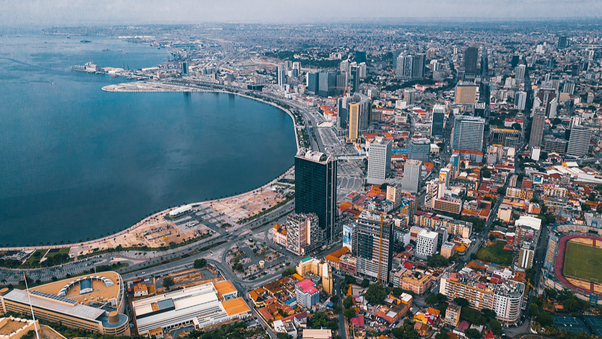
File Photo: Luanda, Angola skyline. /CFP
Luanda, the capital of Angola is set to host the Global Tourism Forum Investment Summit 2026 from June 17 to 19. Expected to be held under the high patronage of Angolan President João Manuel Gonçalves Lourenço, the event, jointly organized by the World Tourism Forum Institute and the Kleber Group brings together various bigwigs in the tourism ecosystem including international investors and tourism leaders. For Angola, the Global Tourism Forum Investment Summit 2026 marks a significant step in the country’s push to diversify away from oil dependency. World Bank data show oil accounts for 30 percent of Angola’s GDP, 65 percent of revenues and more than 95 percent of goods exports, making the country highly susceptible to oil price shocks. In a bid to address this challenge, Angola aims to leverage major platforms including the Global Tourism Forum Investment Summit 2026, to build adequate momentum around its national investment strategy and attract tourism investments as it accelerates concerted efforts to diversify the economy.
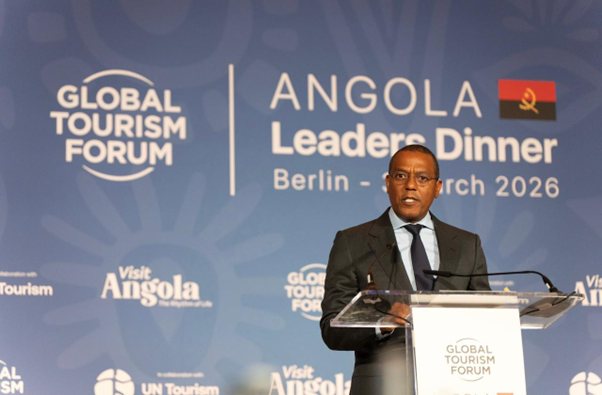
H.E. José de Lima Massano, Minister of State for Economic Coordination, Republic of Angola
In March this year, Angola became the third African country to host the ITB Berlin, the world’s largest tourism trade fair. At the ITB Berlin 2026, Márcio de Jesus Lopes Daniel, Angola’s Minister of Tourism revealed that tourism has emerged as a key pillar in the country’s diversification strategy. He said “Angola cannot base its economic future on oil alone. Tourism is our green oil, with enormous potential to create jobs, develop rural regions and sustainably utilise our natural and cultural heritage.” Home to various tourism destinations including wildlife parks, beaches, desert landscapes and waterfalls, Angola, through world-renowned platforms such as ITB Berlin and the Global Tourism Forum Investment Summit 2026 aims to showcase its tourism potential and forge international partnerships. “Angola is entering a new phase in which tourism potential is being translated into concrete business opportunities,” Daniel disclosed at the Berlin event. “We have a clear strategy, structured projects and a strong institutional commitment to build long term partnerships with international investors.”
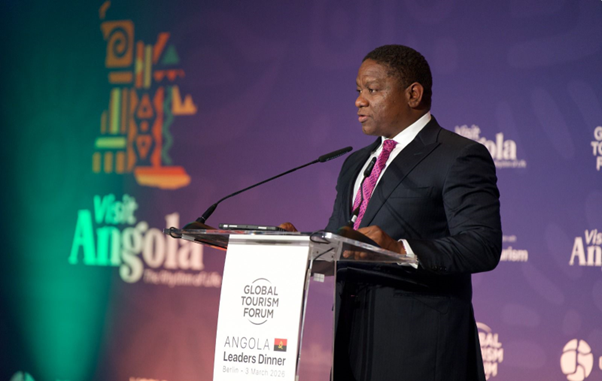
H.E Márcio de Jesus Lopes Daniel, Minister of Tourism, Republic of Angola
For example, following the action to exempt tourist visa for 98 countries worldwide, Angola as part of efforts to further support tourism development introduced the the National Tourism Development Plan (PLANATUR). Under the PLANATUR, which complements the National Development Plan (2023-2027) to diversify away from oil, Angola seeks to double tourism revenue by 2027, create 500,000 new jobs, and expand the tourism sector’s contribution to GDP to 1.9 percent. In an exclusive interview with Alexander Ayertey Odonkor, global economist and director of the Ghana Centre for China Studies, Bulut Bağcı, the President of the World Tourism Forum Institute disclosed how the summit could help Angola achieve its tourism development goals.
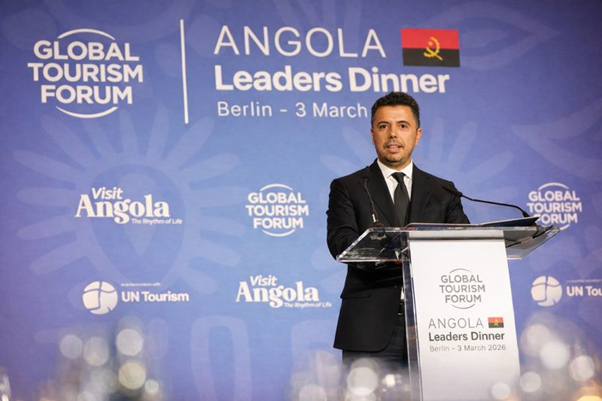
Bulut Bağcı, President of the World Tourism Forum Institute
According to Bağcı, ‘‘First, the Summit will position Angola as one of Africa’s most promising tourism investment destinations. By bringing together international investors, hotel groups, airlines, development banks, sovereign funds, tour operators, and tourism leaders, the Forum can help attract capital into priority areas such as hospitality, resorts, eco-tourism, cultural tourism, aviation, infrastructure, and destination development. Second, the Summit can create direct business opportunities through B2B meetings, investment presentations, project showcases, and public-private partnership discussions. This is especially important for achieving Angola’s target of doubling tourism revenue, because revenue growth requires new hotels, better connectivity, stronger tourism products, and a wider international market presence.’’
Since its approval in December 2023, the PLANATUR, which aims to bridge various infrastructure gaps in key areas including energy, transport, telecommunications and water, is bearing fruits, helping Angola in consolidating its position as a dynamic and fast-growing tourism market. According to UN Tourism in 2025, Angola witnessed international arrivals surge by 28 percent over the previous year, reaching 223,140 visitors, well above pre pandemic levels. Reflecting renewed demand and expanded investment activity along the tourism value chain, Angola’s new arrivals in recent years remain below the historical highs of 2010s – suggesting there is more room for improvement. In January 2026 President João Manuel Gonçalves Lourenço authorised an investment of more than US$500 million to further bridge infrastructure gaps. The move which marks an unprecedented national effort to foster growth in Angola’s tourism sector is expected to lift significant burden from investors, allowing them to focus resources exclusively on tourism ventures and facilities. At the Global Tourism Forum Investment Summit 2026 Angola aims to attract foreign capital, enhance public-private partnership and further support tourism sector growth as it accelerates national effort to diversify its economy away from oil.
About the author: Alexander Ayertey Odonkor is a global economist with keen interest in the social, environmental and economic landscape of developed countries, emerging markets and developing economies particularly in Asia-Pacific, Africa, Europe and North America. He holds a master’s degree in Finance and a bachelor’s degree in Economics and Finance, together with a comprehensive postgraduate education, spanning entrepreneurship, environmental and social management, mining, risk management, electronic trading, and business management pursued at Harvard University, Massachusetts Institute of Technology, Curtin University, University of Adelaide, New York Institute of Finance and Delft University of Technology, respectively.
Production credits: This commentary is produced by the Ghana Centre for China Studies.
Disclaimer: At the Ghana Centre for China Studies we eschew specific policy positions. All positions and opinions expressed in this publication are solely those of the author (s).